Projects

Safe Click Project

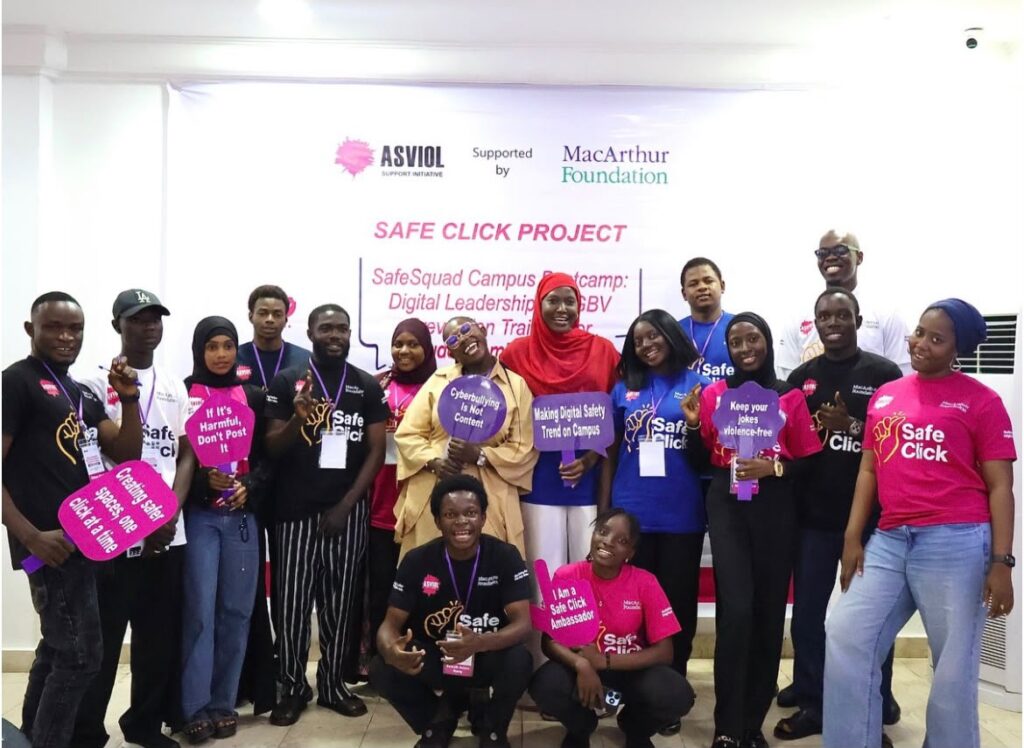
OVERVIEW The Safe Click Project is an 18-month initiative by ASVIOL Support Initiative, supported by the MacArthur Foundation, designed to understand how young people in Nigerian universities perceive and experience Online Gender-Based Violence (OGBV) and to translate that understanding into safer, violence-free digital campus environments. The project bridges research and action, working across three institutions: Baze University, Nasarawa State University (Keffi), and the University of Abuja, and engaging undergraduate students, university management, student leaders, and academic staff alike.  Real engagement meant sustained dialogue with Vice Chancellors’ offices, Student Affairs Divisions, academic leadership, and student leaders  building a shared understanding of OGBV as a safeguarding issue that universities could no longer treat as peripheral.    Our Work So Far Secured institutional partnerships with three universities — University of Abuja, Baze University, and Nasarawa State University (Keffi)  through Vice Chancellors’ offices, Student Affairs Divisions, and academic leadership, laying groundwork for research, policy engagement, and future programming. Engaged 10+ university management and student affairs officials through advocacy meetings and technical consultations, building ownership for the project from the top down. Trained and confirmed 15 student leaders (five per university) as the inaugural cohort of SafeSquad Campus Ambassadors, positioning them to lead peer education on their campuses. Ran a two-day SafeSquad Campus Bootcamp with digital safety and SGBV experts, assessed through student presentations and structured discussion. Developed a digital rights and safety toolkit, equipping students and partner institutions with practical resources to identify, prevent, and respond to OGBV. Hosted a national webinar, “Threats in the Digital World,” expanding the conversation on OGBV to participants across Nigeria. Sustained a digital advocacy campaign producing evidence-informed content on OGBV, digital safety, and reporting pathways. Results at a Glance 3 universities formally partnered — Abuja, Baze, and Nasarawa State (Keffi) 15 student ambassadors trained as the first SafeSquad cohort 10+ officials engaged across university leadership and student affairs 65,500+ social media accounts reached, generating approximately 198,000 content views 2-day bootcamp delivered by digital safety and SGBV experts 1 national webinar connecting participants across Nigeria

Safe Click Project Read More »
Flow with Dignity Project

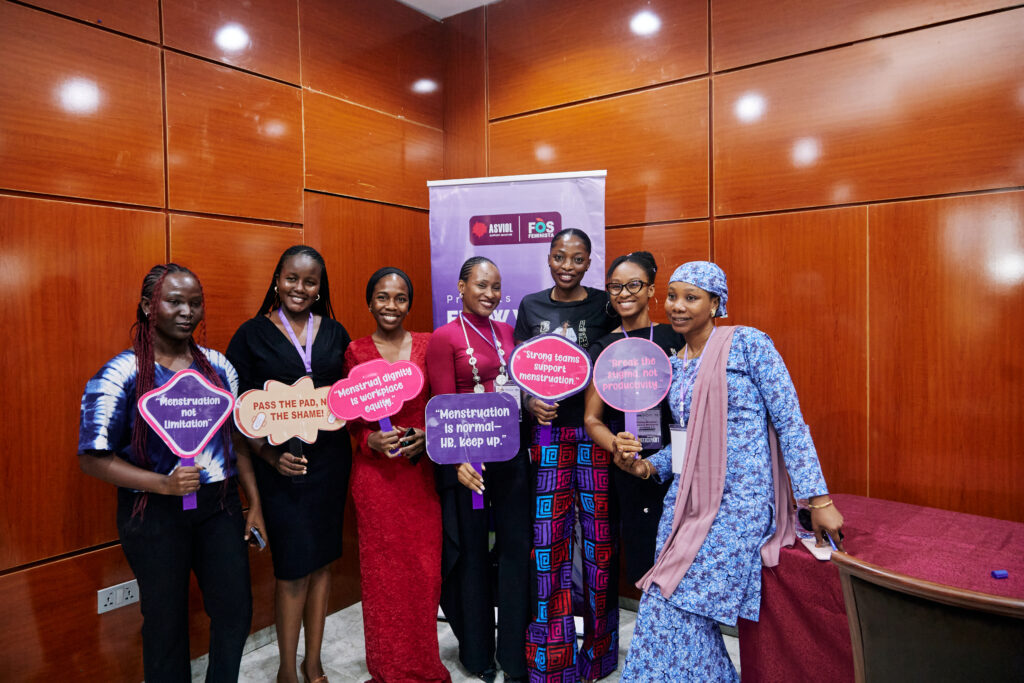
OVERVIEW In many workplaces, menstruation is treated as invisible  and the everyday realities of menstruating employees are largely ignored. This neglect often forces them to navigate pain, discomfort, and stigma quietly, affecting wellbeing, productivity, and dignity at work. Flow with Dignity was created to confront this gap by placing menstrual dignity firmly within the workplace conversation, engaging private sector organizations to examine how internal practices and policies either support or undermine menstruating employees.  By combining advocacy, sensitization, and practical guidance, Flow with Dignity is proving that when workplaces acknowledge menstruation, dignity follows and when dignity is built into work, everyone benefits. WHAT WE DID RESULTS AT A GLANCE  

Flow with Dignity Project Read More »

Mai Shayi Movement

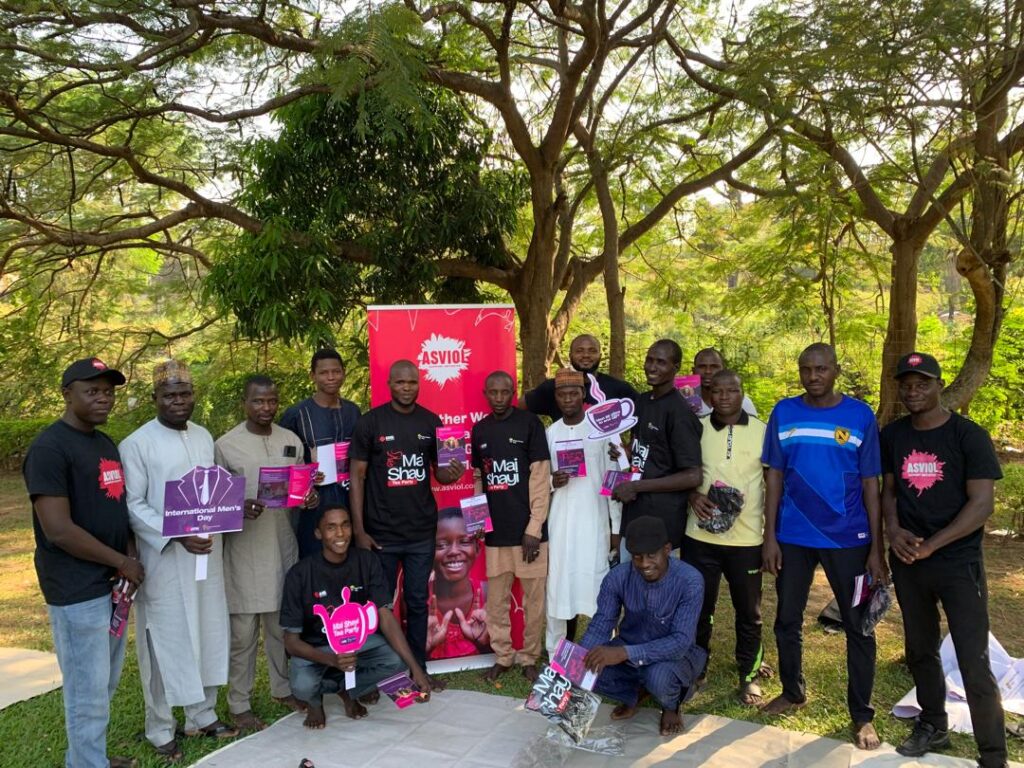
The Mai Shayi Movement The Mai Shayi spot, a place many Nigerian men visit daily, naturally emerged as a strategic point of engagement for the Mai Shayi Movement. Not because it is formal or structured, but precisely because it isn’t. It has become a third space: where Nigerian men gather after work, talk freely, negotiate ideas, and shape each other’s understanding of the world. We saw an opportunity hidden in plain sight: What if the same spaces that shaped harmful norms could become the very places where change begins? With support from the Embassy of Sweden, the Mai Shayi Movement brought together 15 tea sellers to become allies against GBV WHAT WE DID RESULTS AT A GLANCE Bello’s Story of Change  “This movement gave me the courage to speak up. I now understand that silence can make the problem worse. I will continue to be an ally against SGBV.”Those were Mallam Bello’s words at an event commemorating the progress of the movement As of 2025, Mallam Bello shared how the movement reshaped not only his understanding of SGBV, but also his sense of responsibility within his community. Mallam Bello was troubled by the violence he heard in his neighborhood. The man beating his wife was also a regular customer he served at his Mai Shayi spot. Although the situation disturbed him, he never realized that this everyday relationship gave him the influence to speak up. The Mai Shayi Movement Capacity Building Workshop changed that. After the sessions, he felt equipped with the right  information and confidence. One day, he approached his neighbor. Speaking calmly and respectfully, he explained the harm being caused and why things needed to change. To his surprise, the man listened.He acknowledged his wrongdoing and promised to do better.

Mai Shayi Movement Read More »

Seeds of Hope Project

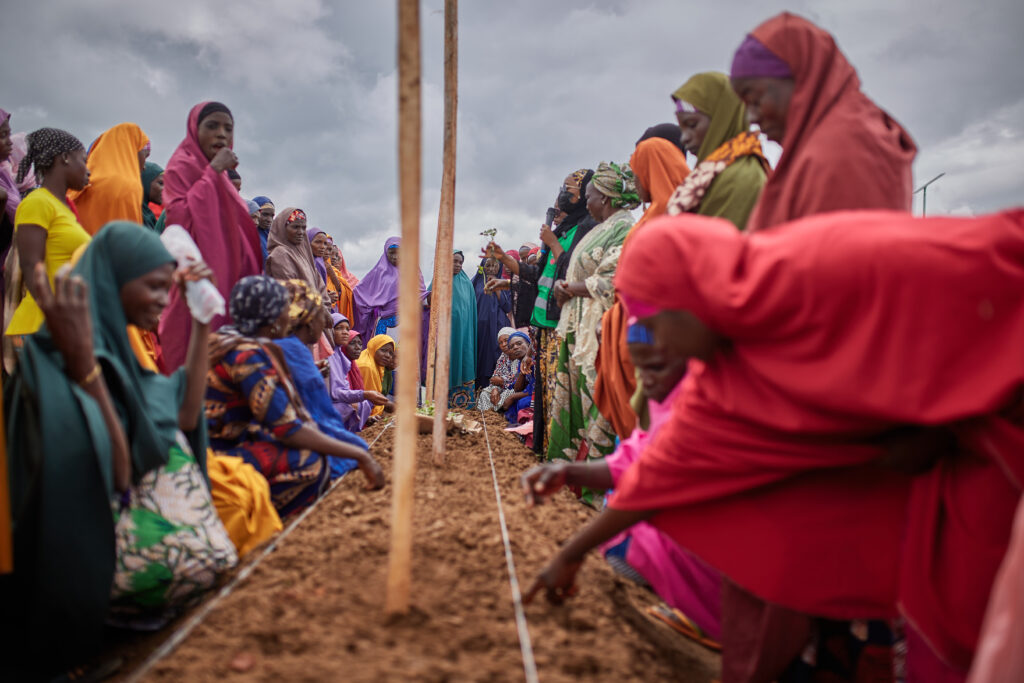
OVERVIEW When we first entered Tudun Biri, the community was still carrying the weight of the December 2023 drone tragedy. Many women had lost income, land, and the sense of stability that farming once gave them. What they hadn’t lost was will and Seeds of Hope supported by the French Embassy in Nigeria was created to meet that will with opportunity. The project brought together 50 women ready to start again, and 50 men willing to be allies in that journey. Over nine months, Seeds of Hope became more than an agricultural program; it became a space where women rediscovered their capabilities, moved from only victims of tragedy to budding entrepreneurs and symbols of what is possible when women are   empowered. What We Did Results at a Glance Asabe’s Story of Change Meet Asabe Ayuba, a farmer from Tudun Biri, Kaduna State, who this year has been able to rebuild her farm, expanding from one crop to several crops like cucumber, tomato, and okra. In December 2023, an accidental drone strike hit the Tudun Biri community, destroying lives, homes, and the farmland that was her only source of income. She lost almost everything and didn’t know how to start again. But in September 2025 with the climate-smart farm training and quality seedlings received from the Seeds of Hope project, supported by The French Embassy in Nigeria. Asabe can now provide for her family again and has future aspirations to dream even bigger and help other women in Tududn Biri Community learn the same skills and be empowered.

Seeds of Hope Project Read More »